

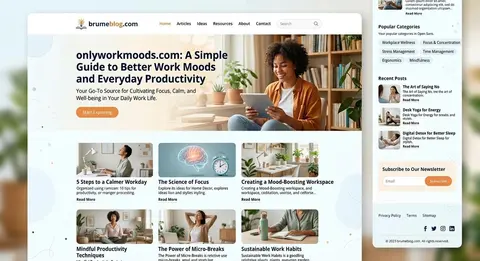
Work does not always feel the same. Some days are focused and productive, while others feel slow, distracting, or mentally exhausting. onlyworkmoods com is a useful concept for thinking about how your surroundings, habits, workload, and daily routines influence the way you feel while NK88OK.COM.
Instead of treating productivity as simply “working harder,” the idea behind onlyworkmoods com can be connected to creating better conditions for concentration, motivation, and consistency. A comfortable workspace, realistic schedule, and clear priorities can make a noticeable difference in the working NẠP TIỀN NK88.
What Is onlyworkmoods com?
onlyworkmoods com can be understood as a work-focused concept centered on mood, environment, and productivity. It brings attention to something many people overlook: how you feel while working can influence how effectively you complete your tasks.
A productive workday is not necessarily one where you stay busy every minute. Sometimes, the most useful approach is to remove distractions, organize your responsibilities, and create enough space to concentrate properly.
Think of your work environment like a car dashboard. If every warning light is flashing, it becomes difficult to focus on driving. Similarly, too many notifications, unclear tasks, noise, and constant interruptions can make ordinary work feel unnecessarily difficult.
The simple principle is worth remembering: “A better work mood can make ordinary tasks feel easier.”
Why Work Mood Matters
Your mood can affect how you approach everyday responsibilities. When you feel comfortable and organized, starting a difficult task may seem more manageable. When your surroundings are stressful or chaotic, even a simple assignment can feel overwhelming.
This does not mean you need to feel motivated all the time. Nobody has perfect energy every day. Instead, the goal is to build routines that make productive behavior easier even when motivation is low.
For example, imagine two people receiving the same three-hour assignment. One has a clean desk, a clear task list, and their phone notifications turned off. The other is surrounded by clutter and constantly checking messages. Their workload is identical, but their working experience can be completely different.
As the saying goes, “You do not always need more motivation; sometimes you need fewer distractions.”
Creating a Better Work Environment
Your physical environment can influence how comfortable you feel during long periods of work. Small changes can make a workspace feel more practical without requiring an expensive office setup.
Start with the basics:
- Keep unnecessary items away from your main workspace.
- Use comfortable and appropriate lighting.
- Keep frequently used tools within easy reach.
- Reduce unnecessary background noise.
- Make sure your chair and desk support a comfortable posture.
- Keep your computer screen positioned at a practical height.
A better workspace does not have to look perfect. The purpose is simply to create an area where your brain receives fewer signals that something needs attention.
Even a small desk can work well when it is organized. A clean workspace is less about appearance and more about reducing friction between you and the task you need to complete.
The Connection Between Mood and Productivity
Productivity is often discussed as if it depends entirely on discipline. Discipline certainly matters, but your emotional state also affects how you approach work.
When you are frustrated, tired, or distracted, you may spend more time avoiding a task than actually completing it. Breaking the same task into smaller steps can make it feel less demanding.
For example, instead of writing “finish the report,” your list could say:
- Review the information.
- Create the outline.
- Write the introduction.
- Complete the main sections.
- Check the final version.
The smaller tasks provide visible progress. That progress can create momentum, which makes it easier to continue.
“Progress becomes easier to notice when the work is divided into steps.”
Building a Practical Daily Routine
A good routine should help you work consistently without making your day unnecessarily complicated. You do not need a schedule containing dozens of activities.
Start by identifying your most important responsibilities. Choose a few priorities instead of filling your entire day with tasks.
A simple working routine could look like this:
- Begin with your most important task.
- Work without unnecessary interruptions for a focused period.
- Take a short break.
- Continue with the next priority.
- Review what you completed before finishing the day.
The advantage of a simple routine is flexibility. If something unexpected happens, you can adjust the schedule without feeling as though the entire day has failed.
onlyworkmoods com fits naturally into this approach because the focus is not simply on completing more tasks. It is also about understanding the conditions that help you work comfortably and consistently.
Managing Digital Distractions
Phones, email, social media, and constant notifications can quickly break concentration. A notification may take only a few seconds to read, but returning to the original task can take much longer.
One practical solution is to create specific periods for checking messages. Instead of responding to every notification immediately, you can review them after completing a focused work session.
For example, someone working from home might keep their phone away from the desk for 30–60 minutes while completing an important assignment. After that period, they can check messages during a planned break.
The goal is not to eliminate technology. It is to make technology work for your routine instead of allowing it to control your attention.
Making Work More Comfortable
Comfort matters when you spend several hours at a desk. Physical discomfort can become another source of distraction, especially when it continues throughout the day.
Simple habits can help:
- Change your sitting position regularly.
- Stand and move around during breaks.
- Keep water nearby.
- Adjust your screen and chair appropriately.
- Avoid working continuously for very long periods.
- Give your eyes regular opportunities to rest.
These habits are easy to overlook because they do not appear directly related to productivity. However, small sources of discomfort can gradually make a work session harder.
A comfortable environment is not about luxury. It is about removing unnecessary obstacles so that your attention can remain on the work.
Using Breaks Without Losing Momentum
Taking breaks does not automatically mean wasting time. A short break can provide an opportunity to step away from the screen and reset your attention.
The important part is how you use the break. Scrolling through endless social media posts can sometimes make it harder to return to focused work.
Instead, consider simple activities such as:
- Walking around the room.
- Stretching.
- Drinking water.
- Looking away from the screen.
- Getting some fresh air.
- Taking a few quiet minutes.
A useful rule is simple: “A break should refresh your attention, not replace your work.”
When you return to your desk, you should know exactly what you are going to do next. This makes it easier to restart without spending another ten minutes deciding where to begin.
Staying Motivated During Difficult Tasks
Not every task is interesting. Some responsibilities are repetitive, complicated, or simply unavoidable. Waiting until you feel highly motivated can therefore create unnecessary delays.
Instead, focus on starting.
Tell yourself that you will work on the task for a short, manageable period. Once you begin, continuing often becomes easier because the hardest part was getting started.
You can also connect difficult tasks with smaller rewards. For example, after completing an important section of work, take a short break or move to a more enjoyable task.
The idea is not to make every task exciting. It is to make difficult work easier to begin and easier to continue.
Work Moods in Remote and Home Offices
Working from home offers flexibility, but it can also blur the line between work and personal life. When your desk is only a few steps away from your bed or living room, it can become difficult to mentally switch between work mode and personal time.
Creating a consistent workspace can help. Even if you only have one small corner available, use that area primarily for work whenever possible.
A clear beginning and ending can also make a difference. Start work at a reasonably consistent time, organize your priorities, and create a simple shutdown routine when the day is finished.
For remote workers, onlyworkmoods com can be viewed as a reminder that productivity involves more than internet access and a laptop. The atmosphere surrounding the work matters too.
How to Make Your Workspace Feel More Positive
Your workspace does not need to follow a specific design style. What matters is whether the environment helps you feel comfortable and ready to work.
Some people prefer minimal desks with almost nothing visible. Others work better with notebooks, planners, photographs, or other personal items nearby.
Try different arrangements and pay attention to what helps you concentrate.
You might find that a brighter room improves your energy, while another person prefers a quieter and softer environment. There is no single workspace that works perfectly for everyone.
“The best workspace is not the one that looks impressive; it is the one that helps you work.”
Avoiding the Pressure to Be Productive All Day
One of the biggest problems with modern productivity culture is the idea that every minute should produce measurable results. Real working days are rarely that simple.
Some tasks require planning. Some require research. Some require communication. Others simply take longer than expected.
Instead of measuring your entire day by the number of completed tasks, consider whether you made meaningful progress on your priorities.
A day where you complete two important tasks can be more valuable than a day where you complete ten small tasks that were not particularly important.
This is where the broader idea of onlyworkmoods com becomes practical: productivity should support sustainable work rather than create constant pressure.
Simple Habits You Can Start Today
You do not need to completely redesign your working life. Start with a few changes that are easy to maintain.
Try these habits for a week:
- Write down your top three priorities each morning.
- Keep your phone away during focused work.
- Clean your workspace before starting.
- Take short breaks between focused sessions.
- Drink enough water during the day.
- Finish one task before jumping into another when possible.
- Review your progress before ending work.
After several days, notice which habits actually help. Keep the useful ones and remove anything that feels unnecessary.
Small improvements are often easier to maintain than dramatic productivity systems.
A Practical Example of a Better Workday
Consider a freelance writer who normally starts the day by checking every email and social notification. An hour later, they have answered several messages but have not started their main assignment.
They change the routine the following week. They begin by choosing one important writing task, silence unnecessary notifications, and work on the assignment before checking messages.
After completing the first focused session, they take a short break and then handle communication.
Nothing about their job has changed. The workload is the same. The difference is the structure surrounding the work.
This example shows why onlyworkmoods com can be approached as more than a phrase. The way you organize your environment and attention can change how your working day feels.
Final Thoughts on onlyworkmoods com
onlyworkmoods com represents a simple idea: better work is not always about doing more. It can also come from creating better conditions for concentration, comfort, and consistency.
A practical workspace, manageable routine, fewer distractions, useful breaks, and realistic expectations can all contribute to a better working experience.
You do not need a perfect routine to become more productive. Start with one small improvement, observe the result, and build from there.
“Better work begins with a better way of approaching the workday.”
