

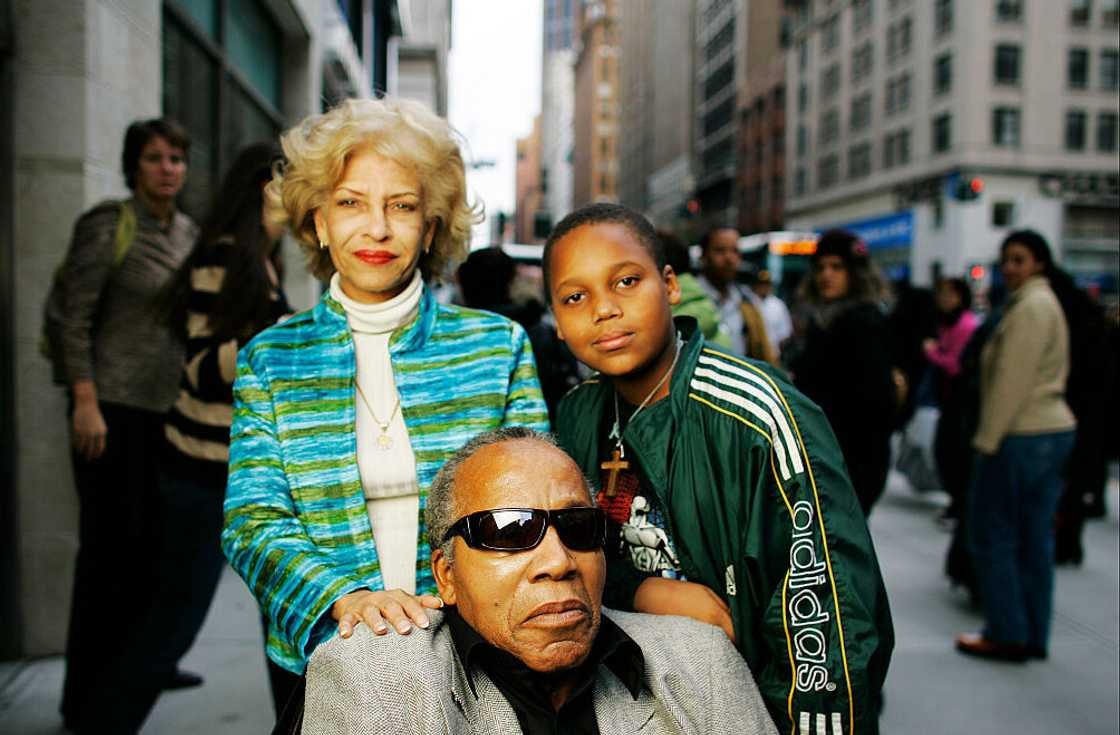
In 1971, a woman walked into Madison Square Garden on the arm of Harlem’s most feared drug lord wearing the outfit that would help bring him down: a chinchilla coat and matching hat she had bought him herself. Her name was Julie Farrait — and she was the wife of Frank Lucas, the heroin kingpin immortalized by Denzel Washington in American Gangster.
But the coat was only the beginning. Over the next four decades, Julie would be raided, imprisoned, separated from her husband, reconciled with him — and then, at nearly 70 years old, arrested again in a cocaine sting. Through it all, one thing never wavered: her bond with Lucas. But there is much more to the story than the movie told.
From Puerto Rico to Harlem to federal prison, here is the real story of Julie Farrait: the marriage, the famous coat, the two prison sentences, her daughter’s remarkable second act — and where she is now.
| Full Name | Julianna Farrait (known as Julie Farrait) |
|---|---|
| Known For | Wife of Harlem drug trafficker Frank Lucas |
| Birth Year | Around 1940–1941 (exact date never made public) |
| Age | Approximately 85 (as of 2026) |
| Birthplace | Puerto Rico |
| Nationality | Puerto Rican-American |
| Profession | Not publicly known (no documented independent career) |
| Spouse | Frank Lucas (married 1967; until his death in 2019) |
| Children | Daughter Francine Lucas-Sinclair (Frank had other children from other relationships) |
| Portrayed As | “Eva” in American Gangster (2007), played by Lymari Nadal |
| Current Status | Lives privately; no confirmed recent public information |
Who Is Julie Farrait?
Julie Farrait was the longtime wife of Frank Lucas, the Harlem drug trafficker who built one of the most notorious heroin empires in American history during the late 1960s and early 1970s. Lucas cut out the middlemen, imported heroin directly from Southeast Asia, and sold it under the brand name “Blue Magic” — amassing a fortune he once claimed reached $52 million.
Julie was not a bystander to that empire. According to Biography.com, she became involved in her husband’s drug enterprise and served five years in prison for it. Court cases and prison time made her story independently significant — she was a participant, not just a spouse who happened to live in the house.
Her life later became part of the public fascination surrounding Ridley Scott’s 2007 film American Gangster, in which Denzel Washington played Lucas and Russell Crowe played detective Richie Roberts. But the movie changed and simplified several details of her real life — starting with her name: on screen, she became “Eva.”
Early Life and Family
Julie Farrait was born in Puerto Rico around 1940 or 1941 — the exact date has never been firmly established by a primary source — and spent her early years in a modest, close-knit island household. Like many Puerto Ricans of her generation, she later moved to the United States mainland in search of broader opportunities, a decision that would change the entire direction of her life.
One of the most repeated claims about her youth is also one of the most wrong. The film American Gangster presents her as a former Miss Puerto Rico. Frank Lucas himself corrected the record: “She was some kind of homecoming queen, but I don’t know about [being Miss Puerto Rico]. No doubt about it, she was a pretty girl.” Researchers later confirmed that the name Julie Farrait appears nowhere on the Miss Puerto Rico winners list.
The homecoming-queen detail matters because it is one of the few verified facts about her early life. Almost everything else — her parents, her schooling, her life before Frank Lucas — remains outside the public record.
Meeting Frank Lucas
Accounts of their first meeting vary, which is fitting for a love story this mythologized. Frank Lucas frequently traveled to Puerto Rico, where he would isolate himself to think through his “business” ideas — and it was on one of those trips, according to a New York Magazine profile, that he met Julie. Other accounts place their meeting on a flight between Puerto Rico and New York in the 1960s, with instant attraction.
What is consistent across sources is the timeline: the relationship developed into a serious romance, and the couple married in 1967. Frank was already rising through New York’s drug trade, and Julie — young, beautiful, and drawn to his confidence and wealth — stepped directly into a world of luxury shadowed by constant danger.
Their marriage began just as Lucas was expanding his criminal operation. Julie did not enter a quiet domestic life. She entered an empire.
Life as Frank Lucas’s Wife
Being Frank Lucas’s wife in the late 1960s and early 1970s meant living at the apex of Harlem’s underworld. The money was staggering — Lucas claimed he once cleared $1 million a day on 116th Street — and the lifestyle matched it: luxury cars, expensive homes, designer wardrobes, and parties that drew celebrities, politicians, and entertainers.
Julie became known for her elegant fashion sense: mink coats, diamonds, and outfits that made her stand out as, in one profile’s phrase, “the queen beside the kingpin.” But the glamour existed alongside constant fear — of betrayal, of violence, and of the law-enforcement investigation that was quietly building.
She was also, by documented accounts, part of the operation itself — not merely decorating it. That distinction would define the rest of her life.
The Chinchilla Coat That Changed Everything
The most famous anecdote of Julie Farrait’s life is also one of the best documented. According to the BET documentary series on American Gangster, it was Julie who bought Frank the fur coat — which he initially assumed was her own new coat. The film depicts it as a $50,000 chinchilla coat with a $10,000 matching hat; other accounts put the figures even higher.
Frank wore the coat and hat to the Muhammad Ali–Joe Frazier fight at Madison Square Garden on March 8, 1971. The detectives in attendance noticed him immediately — his seats, they observed, were better than those of the Italian Mafia. Frank became convinced the coat was what put him on law enforcement’s radar.
The real detective Richie Roberts later offered a correction: law enforcement already knew about Lucas. But the coat, Roberts said, “brought a lot more attention onto him” — flaunting that kind of wealth in front of cops earning $25,000 a year was, in his words, “a bad mistake.” Julie’s gift had become evidence of the empire’s fatal flaw: it could not resist being seen.
Relationship with Frank Lucas
The fall came in January 1975, when federal agents raided the Lucas home in Teaneck, New Jersey, seizing over $500,000 in cash. Their daughter Francine was three years old. During the raid, Julie threw suitcases filled with tens of thousands of dollars out the bathroom window and stuffed cash into little Francine’s pants in a desperate attempt to hide it. Julie spent six months in jail after the raid.
Worse followed. Several months after Frank’s release from prison, Julie took young Francine on a trip to Las Vegas — where, unbeknownst to the child, her mother was assisting with a drug deal. The FBI busted Julie there, and she served four and a half years in federal prison. Biography.com records a five-year sentence for her participation in the enterprise overall.
Prison broke the marriage’s geography if not its bond. After her release, Julie returned to Puerto Rico while Frank rebuilt his life, and the couple lived separately for years. But they eventually reconciled — Biography.com dates the reunion to 2006 — and a 2007 account described them as married for roughly forty years. Wealth, crime, imprisonment, separation, reconciliation: few marriages have survived that much.
How Julie Shaped Frank’s Life
For all the mythology around Frank Lucas — the coffins, the Blue Magic, the $52 million — the people who knew him describe a man anchored by his wife. Julie brought, in Frank’s own telling, a sense of calm and grace to a life built on chaos. She was the glamorous, composed partner who stood beside him at his peak and, crucially, did not abandon him in his fall.
Her loyalty had a price, and she paid it in prison time — twice. But it also gave Lucas’s story its human center. The real Richie Roberts called the film’s depiction of Lucas as a family man “ludicrous” and “sickening,” insisting it was invented for drama. Whatever the truth of the Thanksgiving-table scenes, the documented record shows a wife who stayed connected to her husband across decades of separation and scandal, to the very end.
Frank Lucas died on May 30, 2019, at the age of 88. Julie was there at his funeral in Newark, New Jersey — her last confirmed public appearance.
Values and Family
Julie and Frank’s daughter, Francine Lucas-Sinclair, grew up inside the blast radius of her parents’ choices: a toddler during the 1975 raid, raised afterward by her mother and her mother’s parents in Puerto Rico until the age of nine, then returned to New Jersey when Frank got out — only to watch her mother go back to prison after the Las Vegas bust.
Francine could have disappeared into that legacy. Instead, she inverted it. She founded the Yellow Brick Road Foundation, a nonprofit supporting children with incarcerated parents through counseling, education, and community programs — turning the defining trauma of her childhood into a mission. Her advocacy work has, in many ways, become the family’s second act: a move from crime toward repair.
Frank had other children from other relationships — sources identify as many as seven children in total — but Francine is the child he shared with Julie, and the one who most publicly carries the family name forward.
Life Away from the Spotlight
Julie’s attempt at a quiet life did not hold. In 2010, at nearly 70 years old, she was arrested in Puerto Rico in a cocaine sting — authorities said she tried to sell two kilograms of cocaine to an undercover informant. Decades after the fall of Frank’s empire, she was still entangled in the drug trade, raising painful questions about whether she had ever truly escaped it.
In February 2012, a federal judge in Manhattan sentenced her to five years in prison. In court, she asked for mercy, saying she wanted to care for her ill, 81-year-old husband. The scene — an elderly woman pleading to nurse her aging husband rather than return to a cell — was a stark coda to the glamorous “queen beside the kingpin” of the 1970s.
Since serving that sentence, Julie has vanished from public view. She is believed to divide her time between Puerto Rico and the mainland United States, staying close to family. No confirmed interviews, appearances, or updates have surfaced since Frank’s 2019 funeral.
Family Today
Today, the Lucas family story belongs largely to Francine and her foundation. Julie herself, now around 85, has chosen — or been compelled by age and history into — complete privacy. There is no verified public record of her current residence, health, or daily life, and responsible biographies leave it at that.
What endures is the arc: a Puerto Rican homecoming queen who married into the most notorious drug empire of her era, paid for it twice in federal prison, stood by her husband for over fifty years, and then walked quietly out of the spotlight. Her daughter’s work with children of incarcerated parents may be the closest thing to a final chapter — redemption pursued one family at a time.
Bottom Line
Julie Farrait was never just “Frank Lucas’s wife,” though history keeps filing her under his name. She bought the coat that made him famous to the police. She threw the suitcases out the window. She did the time — twice — and she was still standing at his funeral nearly fifty years after she married him.
Her story is a warning and a portrait at once: of loyalty stretched past every reasonable limit, of glamour curdling into consequence, and of a woman who lived one of the twentieth century’s most dramatic true-crime stories from the inside — and then chose, finally, to disappear from it.
Who is Julie Farrait?
Julie Farrait (also recorded as Julianna Farrait) was the wife of Frank Lucas, the Harlem heroin trafficker whose criminal empire inspired the 2007 film American Gangster. Born in Puerto Rico around 1940–1941, she married Lucas in 1967 and was herself convicted twice on drug charges.
Was Julie Farrait really Miss Puerto Rico?
No. The film American Gangster implies it, but Frank Lucas himself said she was “some kind of homecoming queen,” and her name does not appear on the Miss Puerto Rico winners list. The pageant background was a Hollywood invention.
Did Julie Farrait buy Frank Lucas the chinchilla coat?
Yes. According to the BET documentary on the true story, Julie bought Frank the chinchilla coat and matching hat, which he wore to the March 8, 1971 Ali–Frazier fight at Madison Square Garden — drawing the attention of detectives and, Frank believed, helping to expose his empire.
Did Julie Farrait go to prison?
Yes, twice. She served time in the 1970s for participating in her husband’s drug enterprise (Biography.com records a five-year sentence), and she was arrested again in Puerto Rico in 2010 in a cocaine sting, receiving another five-year federal sentence in 2012.
Does Julie Farrait have children?
She has one daughter with Frank Lucas, Francine Lucas-Sinclair, who founded the Yellow Brick Road Foundation to support children of incarcerated parents. Frank Lucas had additional children from other relationships.
Where is Julie Farrait now?
Her current whereabouts are not publicly confirmed. She is believed to live privately, possibly dividing her time between Puerto Rico and the United States. Her last confirmed public appearance was at Frank Lucas’s funeral in Newark, New Jersey, in 2019.
