

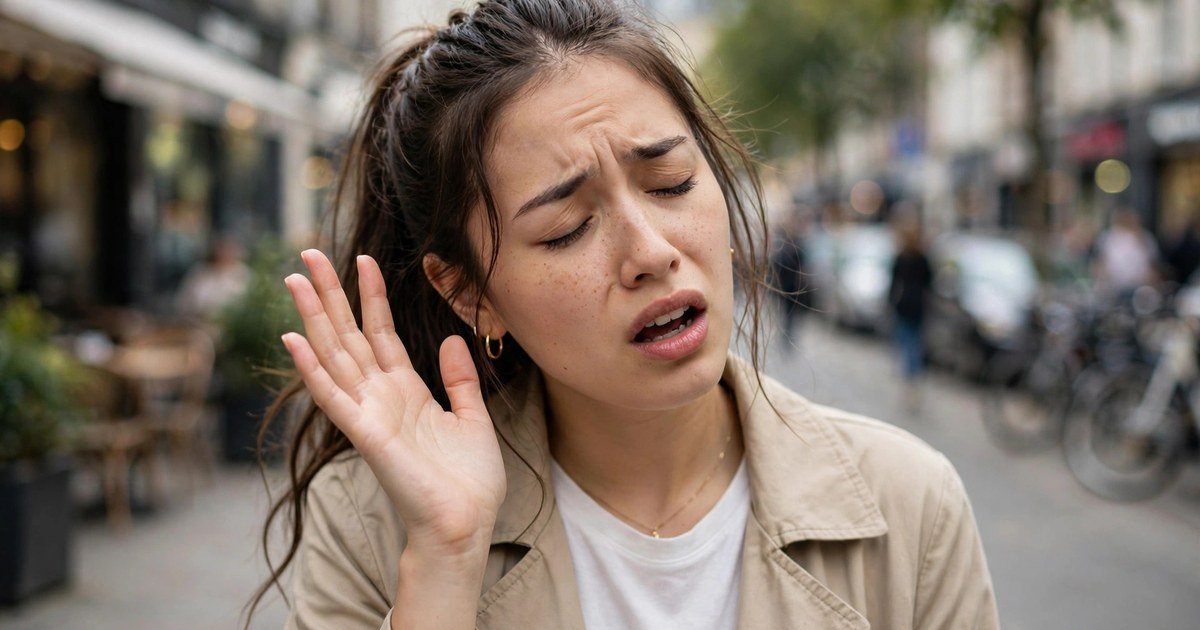
You have seen it a hundred times: a friend texts you something ridiculous, someone on X posts a take so bad it hurts, a TikTok comment section melts down — and there it is, sitting alone at the end of the message: smh. If you have ever wondered what smh meaning actually covers, you are in the right place.
SMH is one of the longest-surviving pieces of internet slang, and it is still everywhere in 2026 — group chats, memes, captions, comment sections. This guide breaks down exactly what SMH means, where it came from, how to use it without sounding awkward, when not to use it, and how to reply when someone sends it to you.
What Does SMH Mean?
SMH stands for “shaking my head.” It is text shorthand for the physical gesture of shaking your head in disbelief, disappointment, or mild exasperation — the exact thing you do in real life when words fail you.
When someone replies “smh” to your message, they are not confused about what you said. They understood it perfectly — and they disapprove, or they cannot quite believe it. Urban Dictionary’s classic definition puts it well: it appears “when someone finds something so stupid, no words can do it justice.”
The tone is usually light rather than furious. Think of it as digital body language:
- Disappointment: “He said he’d call and never did. smh.”
- Disbelief: “You paid full price for that? smh.”
- Self-directed: “Locked my keys in the car again… smh at myself.”
- Commiseration: “The bus is late again. smh, this city.”
Merriam-Webster has flagged SMH as one of its “words to watch,” defining the vibe as “bemused incredulity” — which is a fancy way of saying I can’t believe this, but I’m not surprised either.
Where Did SMH Come From?
SMH is older than most people assume. One of the earliest Urban Dictionary entries dates to February 2004, defining it as an acronym for “shake my head” or “shaking my head,” used when something is so foolish that only a head shake will do. That entry already mentioned souped-up variants like “smfh” — the profanity-laced versions have been around nearly as long as the original.
The acronym grew up alongside early-2000s instant messaging (AIM, MSN Messenger) and forum culture, where typing was slow and every character counted. As texting exploded and Twitter arrived in the late 2000s, SMH rode the wave into the mainstream. By the early 2010s it was a staple of tweets, Facebook statuses, and Tumblr posts — and unlike hundreds of slang terms that flared out, it never left.
Why did it survive? Because it translates a universal human gesture into three letters. Everybody, in every culture, understands what a slow head shake means. That is a hard combination to beat.
How to Use SMH in a Text (Without Sounding Weird)
Using SMH correctly is mostly about placement and casing. Here is the practical breakdown:
1. Keep it lowercase in casual chat
Lowercase smh reads as casual and conversational. ALL-CAPS SMH reads louder and more judgmental — fine when you genuinely mean it, but it can come across as aggressive in a light conversation.
2. Put it where the gesture would go
SMH works as a standalone reaction or as punctuation at the end of a sentence:
- “You waited until midnight to start the essay? smh.”
- “He’s late again. smh 🤦”
- “My team really lost like that… SMH.”
3. Pair it with emoji for tone control
A bare “smh” can read cold. Adding 🤦, 😂, or 😅 softens it and signals you are joking rather than genuinely upset. “smh 😂” is practically a different message from “smh.” — the period alone makes it sterner.
4. Know the stronger variants
When plain SMH does not cut it, people escalate:
- SMDH — “shaking my damn head” (stronger disapproval)
- SMFH — the profanity version (use only with people who will not mind)
These are seasoning, not staples. If every message is SMDH, none of them land.
SMH Meaning in Different Contexts
The core meaning stays the same, but the flavor shifts with the setting:
Texting friends
This is SMH’s home turf — quick reactions to bad decisions, missed plans, and questionable takes. It is almost always affectionate here. “You did WHAT? smh 😂” means you’re an idiot and I love you.
X (Twitter) and comment sections
On public platforms, SMH is commentary. It signals to everyone reading that the thing being discussed is beneath a full response. Entire quote-tweet ratios have been carried by a single “smh.”
TikTok and Instagram captions
Creators use SMH in captions to frame a clip — usually their own fail or someone else’s. It is also a staple of meme pages, where the joke is often the gap between the image and the weary “smh” underneath it. If you run a meme-adjacent account, pairing reaction slang with genuinely funny puns for your captions is a reliable way to keep engagement up.
Gaming chats
In lobbies and Discord servers, SMH is the polite alternative to flaming a teammate. It says that play was terrible without starting a fight.
At yourself
Self-directed SMH is huge: “smh at myself” or “smh I really thought that would work.” It is a way to own a mistake with humor instead of embarrassment, and it almost always gets a sympathetic laugh.
Common SMH Mistakes to Avoid
- Using it in formal writing. SMH is slang, not professional language. Keep it out of work emails, job applications, and messages to your professor. Write the actual sentence instead.
- Overusing it. SMH loses all impact if it ends every message. Save it for moments that genuinely deserve a head shake.
- Confusing it with SMTH. SMTH means “something” — a completely different abbreviation. Double-check before you send.
- Saying it out loud. Pronouncing “smh” as “smuh” in spoken conversation will get you exactly the reaction the acronym describes. It is a texting term; keep it in text.
- Using it with strangers in serious contexts. A bare “smh” to someone you barely know can read as dismissive or rude. With people you do not know well, a full sentence is safer.
How to Respond When Someone Sends You “smh”
Getting an “smh” is not the end of the world — it is usually playful. Match the energy:
- If it is a joke: laugh it off. “I know, I know 😅” or “don’t judge me” keeps it light.
- If they are genuinely disappointed: acknowledge it. “Fair. My bad — what happened?” A little accountability goes a long way.
- If you do not know what they mean: ask. “smh at what? 😂” is a perfectly fine reply.
- If it feels harsh: say so. “Ouch, that felt a bit sharp — are we good?” Tone gets lost in text, and most people will clarify they were kidding.
SMH vs. Similar Internet Slang
SMH has cousins. Here is how they differ:
- SMH (shaking my head) — weary disapproval; the gesture version.
- Facepalm / *facepalm* — stronger embarrassment, often at yourself; more dramatic than SMH.
- RME (rolling my eyes) — sarcastic dismissal; edgier and more confrontational than SMH.
- TBH (to be honest) — a preface for candor, not a reaction at all.
- IDC (I don’t care) — indifference, where SMH is engaged disappointment.
The practical rule: SMH is the mildest, most versatile of the reaction acronyms. When in doubt, it is the safest pick.
SMH Meaning: FAQs
Is SMH rude?
Usually not — it is casual and often affectionate between friends. It can read as dismissive toward strangers or in serious conversations, so read the room.
What does SMDH mean?
“Shaking my damn head” — a stronger, more emphatic version of SMH. Same gesture, more feeling.
Does SMH ever mean “so much hate”?
Rarely. Dictionary.com notes “so much hate” as a secondary meaning, and Bustle mentions “stupid minded humans,” but “shaking my head” is the dominant meaning by an enormous margin. Context will tell you if something unusual is going on.
Can I use SMH at work?
Not in writing, no. In a casual Slack DM with a work friend you know well, a lowercase “smh 😅” is usually fine. In anything formal or documented, write it out.
What does it mean when a girl/guy sends “smh”?
The same thing it means from anyone: mild disbelief or playful disappointment. The acronym does not change meaning by gender — the relationship and the conversation around it are what matter.
Is SMH still used in 2026?
Absolutely. It has survived two decades of slang turnover because it does something no emoji quite replaces: it performs a whole gesture in three letters. It is as current now as it was in 2014.
The Bottom Line on SMH
SMH is digital body language — the text equivalent of the slow head shake you do when someone says something unbelievable. Use it where you would physically shake your head, keep it out of formal writing, and remember that lowercase with an emoji is almost always the friendliest version. Two decades in, “shaking my head” is not going anywhere.
