

Best Anticucho Boliviano Near Me: A Skewers Guide
The search for the best anticucho boliviano near me comes with a built-in trap: most of the internet will show you Peruvian anticuchos. Peru’s version is famous worldwide, but Bolivia has its own distinct tradition — different marinade, different accompaniments, different eating ritual — and it is worth knowing exactly what you are looking for before you start hunting.
This guide explains what makes the Bolivian version its own dish, where to find it, what should be on the plate, and how to eat it the way it is meant to be eaten.
What Anticucho Boliviano Is
Anticucho boliviano is skewered beef heart, marinated in a bold blend of cumin, garlic, vinegar, and dried peppers — particularly locoto and ají colorado — then grilled over real charcoal or wood fire. The marinade is the first thing that separates it from the Peruvian version: cumin leads, the vinegar gives brightness, and the peppers bring a sharper, more assertive heat than Peru’s ají panca.
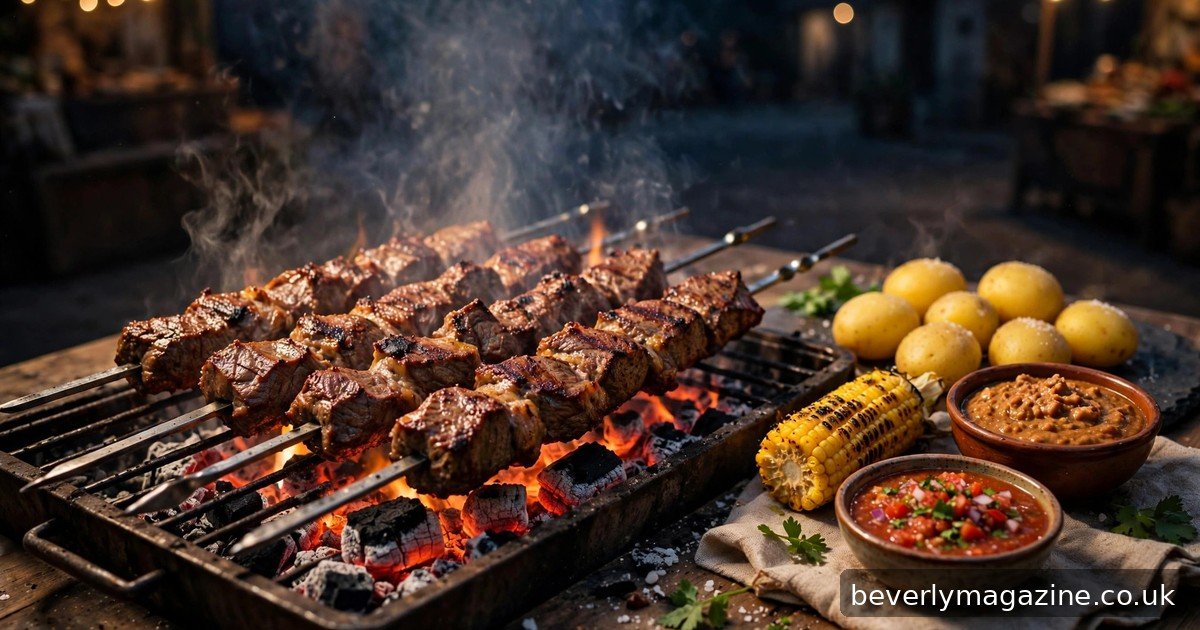
But the real signature of the Bolivian plate is what comes with the skewer. A proper anticucho boliviano arrives with:
- Boiled potato (papa) — whole or halved yellow-fleshed potato, cooked through
- Peanut sauce (salsa de maní) — thick, warm, mildly spicy, slightly sweet
- Choclo — a piece of large-kernel Andean corn on the cob
- Llajwa salsa — the fresh tomato-and-locoto salsa that appears at virtually every Bolivian table
The peanut sauce is the element that surprises first-timers. Thick enough to coat the potato rather than pool around it, it ties the charred meat, the plain potato, and the sharp llajwa into one coherent plate. No other anticucho tradition has it, and it is the fastest way to confirm you are eating the Bolivian version.
Bolivian vs. Peruvian Anticucho: The Honest Comparison
Both traditions share Andean roots and the same core technique: beef heart, spiced vinegar marinade, charcoal grill. Here is where they diverge:
| Bolivian | Peruvian | |
|---|---|---|
| Primary pepper | Locoto, ají colorado | Ají panca |
| Heat character | Sharper, more direct | Milder, slightly fruity |
| Peanut sauce | Yes — essential | No |
| Llajwa | Standard accompaniment | Not typical |
| Typical setting | Street carts, night markets | Street carts and restaurants |
| Potato | Boiled, with peanut sauce | Boiled or with corn |
Neither is more authentic than the other — they are regional expressions of a shared tradition. But if you specifically want the Bolivian version, the peanut sauce and llajwa are your proof. A skewer served with only corn and potato, no matter how good, is the Peruvian plate.
One more distinction: in Bolivia, anticucho is deeply tied to evening street food culture. In La Paz, Cochabamba, and Santa Cruz, vendors set up after dark — the smoke, the smell of cumin hitting coals, the line of people with small plates is the classic scene. Restaurants serve it too, but the dish’s soul is the night cart.
Where to Find the Best Anticucho Boliviano Near Me
Bolivian restaurants
Your primary target. The challenge is that Bolivian restaurants are far less common than Peruvian ones, so start by confirming the restaurant is actually Bolivian — not Peruvian, not generically “Latin.” Check the menu for giveaways: salteñas, pique macho, silpancho, or llajwa mentioned by name all signal a Bolivian kitchen.
In the US, the strongest concentrations of Bolivian restaurants are in the Washington DC metro area (Arlington, Virginia especially), Providence, Rhode Island, Queens, New York, and Miami. In Europe, Madrid and Barcelona have growing Bolivian communities with restaurants. Search maps for “Bolivian restaurant” first, then check menus for anticucho.
Bolivian community events and festivals
This is the insider route. Bolivian Independence Day (August 6) celebrations, church fundraisers, and cultural festivals often feature home cooks making anticuchos over real charcoal — frequently better than restaurant versions, because the cooks learned from street vendors back home. Follow Bolivian community associations in your area on social media; food announcements usually appear a week or two before events.
Latin American markets with prepared food
Some Latin markets run weekend food stalls or have a prepared-foods counter. Bolivian-owned markets occasionally grill anticuchos on weekends. It is inconsistent, but when it happens, it is usually excellent — these are cooks making food for their own community.
Food trucks
South American food trucks at markets and festivals sometimes carry anticuchos. Ask which tradition the skewers follow — a truck run by Peruvians will make the Peruvian version. Both are worth eating; just know which one you are getting.
What Should Be on the Plate
When your anticucho boliviano arrives, run through this checklist:
- The skewer itself. Look for visible char marks and a dark, caramelized crust. The meat should be cut in chunky pieces, not thin slices — thin pieces dry out over the coals.
- The potato. Yellow-fleshed, boiled whole or halved, tender all the way through. It is not a garnish; it is half the dish.
- The peanut sauce. Thick, warm, coating the potato. If it is thin and watery, it was over-diluted. If it is missing entirely, it was over-diluted. If it is missing entirely, you are not eating the Bolivian version.
- The choclo. A small section of large-kernel corn, grilled or boiled. Its sweetness balances the cumin and heat.
- The llajwa. Fresh, bright red, with visible tomato and pepper. It should taste freshly made — sharp, acidic, alive. Stale llajwa is dull and brownish.
If a restaurant serves the skewer on a bare plate with nothing else, ask for the accompaniments. A Bolivian kitchen will know exactly what you mean.
How to Eat It Like It’s Meant to Be Eaten
There is a method, and it matters:
- Don’t eat the skewer alone. The dish is designed as a combination. Take a piece of meat, then a bite of potato with peanut sauce, then a dab of llajwa.
- Use the potato as your sauce vehicle. Drag it through the peanut sauce, then through the llajwa. The plain potato is the canvas; the two sauces are the paint.
- Alternate heat and richness. The peanut sauce is rich and mellow; the llajwa is sharp and hot. Alternating them keeps every bite interesting.
- Eat it hot. Anticucho waits for no one. The char, the warm peanut sauce, the contrast with the fresh llajwa — all of it depends on temperature. If your food arrives lukewarm, the experience is half of what it should be.
- Fingers are fine. At a street cart, you eat off the skewer with your hands. In a restaurant, a fork is normal, but nobody will judge you for picking up the potato.
What to Order Alongside
If the restaurant is Bolivian, take the opportunity to explore:
- Salteñas — Bolivia’s famous baked empanadas with juicy filling. The classic starter.
- Pique macho — a mountain of beef, sausage, fries, peppers, and egg. Order it to share; it is enormous.
- Api con pastel — a hot purple-corn drink with a fried cheese empanada. The traditional morning combination, but good any time.
- Paceña or other Bolivian beer — if available, it is the natural pairing for grilled food.
And if you fall in love with llajwa — most people do — it is worth learning about on its own, since it shows up next to nearly everything in Bolivian cooking.
Beef Heart: What First-Timers Should Know
The traditional meat is beef heart, and it puts some people off before they try it. Honestly: it does not taste like what you expect. Beef heart is a hardworking muscle, dense and lean, with a clean mineral richness — closer to a very beefy steak than to liver or kidney. The strong marinade and the char do the rest.
If you truly cannot face it, some restaurants offer chicken or sirloin versions. They can be tasty, but they are adaptations — the marinade was designed for heart, which holds up to bold spicing better than mild meats. Try the real thing at least once before deciding.
Quality Red Flags
- Gas grill, no char. Real anticucho needs real fire. Pale, unmarked meat is a different dish.
- No peanut sauce. As discussed: this is the Bolivian signature. Its absence means the kitchen is making the Peruvian version or improvising.
- Pre-made skewers sitting out. The meat should hit the grill when you order. Skewers languishing in a display case dry out.
- Vinegar-forward marinade. You should taste cumin and pepper first, brightness second. If it tastes pickled, the marinade ratio is off.
- Tiny portions at high prices. Street food has street-food economics. A restaurant plate costs more, but the skewer should still be substantial.
Frequently Asked Questions
What is anticucho boliviano made of?
Traditionally beef heart marinated in cumin, garlic, vinegar, locoto, and ají colorado, grilled over charcoal and served with boiled potato, peanut sauce, choclo (Andean corn), and llajwa salsa.
How is Bolivian anticucho different from Peruvian?
The marinade uses different peppers (locoto and ají colorado vs. ají panca), the heat is sharper, and the accompaniments differ: the Bolivian plate always includes peanut sauce and llajwa, while the Peruvian version is typically served with just corn and potato.
What does beef heart taste like?
Milder than most people expect — dense, lean, and beefy, more like steak than organ meat. The cumin-garlic marinade and charcoal char dominate the flavor.
Is anticucho boliviano spicy?
Moderately. The locoto and ají colorado bring real heat, and the llajwa adds more. But the peanut sauce and potato mellow it out, so the overall plate is balanced rather than punishing. Ask for llajwa on the side if you want to control the heat.
Where can I find anticucho boliviano in the US?
The DC metro area (especially Arlington, VA), Providence RI, Queens NY, and Miami have the most Bolivian restaurants. Bolivian community festivals and Independence Day events (August 6) are also excellent sources.
Can I make anticucho boliviano at home?
Yes, if you can get beef heart from a butcher and have a charcoal grill. Marinate cubed heart overnight in cumin, garlic, vinegar, and dried hot peppers, grill hot and fast over coals, and serve with boiled potatoes, peanut sauce, and a fresh tomato-pepper salsa. The charcoal is non-negotiable for the real flavor.
The Takeaway
The best anticucho boliviano near me is the one with real char, real cumin in the marinade, and the full plate — potato, thick peanut sauce, choclo, and fresh llajwa. Find a Bolivian kitchen, check for the peanut sauce as your authenticity test, and eat it hot, alternating rich and sharp with every bite. Once you have had the full combination, the Peruvian version will taste like it is missing something — because to a Bolivian palate, it is.
