

What Asado Negro Is — and Why Ordering It Takes Some Know-How
The best asado negro near me is not just a restaurant search. It is a test of whether the kitchen understands one of the hardest dishes in Venezuelan cooking. Asado negro — literally “black roast” — is beef braised for hours in a dark, glossy sauce built from caramelized sugar, and it separates serious Venezuelan kitchens from the rest.
This guide is about the eating experience: what the dish is, when Venezuelans actually eat it, how to read a menu that lists it, what to order around it, and how to tell within two bites whether the kitchen got it right. If you have never ordered it before, start here.
The Dish: Beef, Burnt Sugar, and Patience
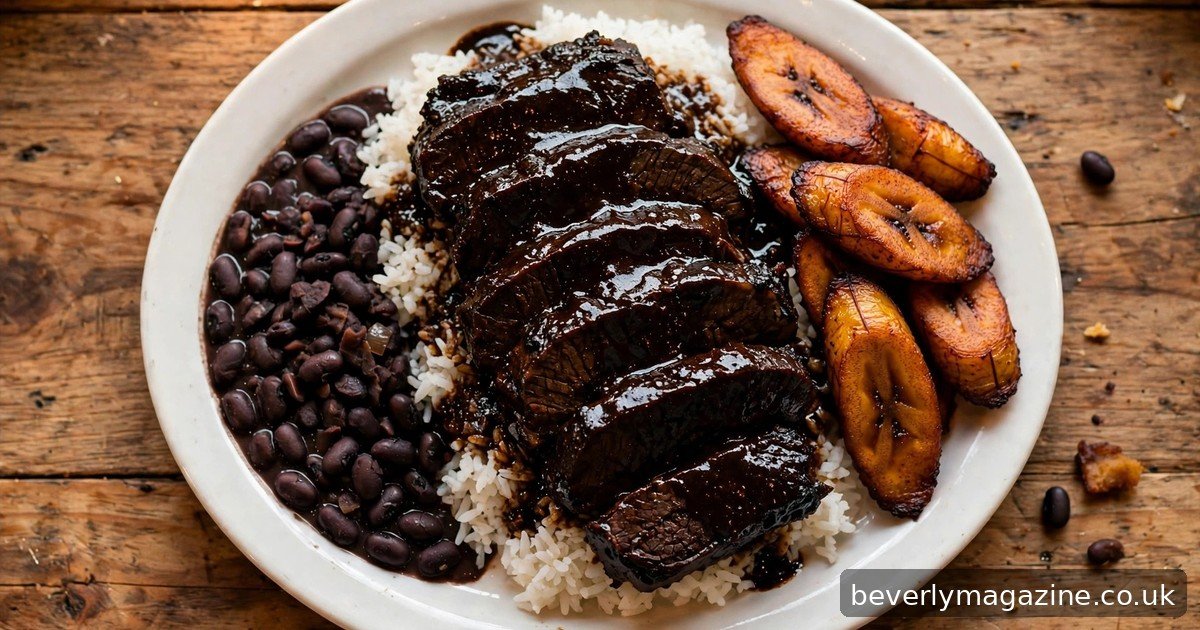
Asado negro is a whole cut of beef — traditionally eye of round (muchacho redondo), though chuck and brisket work — seared hard, then braised low and slow in a sauce whose base is sugar cooked until it is nearly black. Tomatoes, onions, peppers, garlic, and red wine join the pot. Four to six hours later, the meat is fork-tender and coated in a sauce that is savory-sweet, deep brown, and glossy.
The sugar step is where cooks earn their reputation. Caramelized just right, it gives the sauce its color and a rounded sweetness that balances the beef. Taken too far, it turns bitter; not far enough, and the dish is just brown beef stew. There is no shortcut and no hiding a mistake, which is why asado negro is the dish Venezuelans use to judge a cook.
It is traditionally sliced rather than shredded, served in thick rounds with the sauce spooned over. White rice is the standard partner — the rice exists to soak up sauce. Arepas often appear alongside, and a simple salad or fried plantains round out the plate.
Why Asado Negro Is a Holiday Dish
Here is something most English-language guides skip: in Venezuela, asado negro is Christmas food. It belongs on the December table next to hallacas (the Venezuelan Christmas tamale), pan de jamón (ham bread), and ensalada de gallina (chicken salad).
That matters for your search. Venezuelan restaurants and home cooks make asado negro in larger quantities and with more care in December than at any other time of year. Some restaurants add it as a holiday special; Venezuelan bakeries and delis sell it by the tray for Christmas orders. If you have been wanting to try the best asado negro near me at its absolute peak, December is the month.
Outside the holidays, it appears on menus year-round at dedicated Venezuelan restaurants, but it is often a weekend dish rather than a daily one — the long cooking time means kitchens make it in batches. Call ahead, especially on weekdays.
Where to Find the Best Asado Negro Near Me
Venezuelan restaurants run by Venezuelans
This is the obvious answer and still the right one. Look for family-run spots rather than generic Latin restaurants: the menu should include arepas, cachapas, pabellón, and tequeños as a baseline. If a restaurant’s menu reads like it was written by someone who grew up with the food, the asado negro is worth trying.
Practical tip: search maps for “Venezuelan restaurant” rather than the dish name. Dish-name searches often surface grocery listings or irrelevant results; restaurant searches surface the kitchens that actually cook it.
Venezuelan delis and bakeries
In cities with established Venezuelan communities — Miami, Orlando, Houston, Madrid, Buenos Aires, Bogotá — Venezuelan delis sell prepared foods by weight or by tray. Asado negro travels well and reheats beautifully, so deli versions can be excellent. Ask when the current batch was made; same-day or day-before is ideal.
Food halls and Latin markets
Upscale food halls with Latin American vendors sometimes carry asado negro as a prepared dish. Look for versions where you can see actual chunks or slices of meat in dark sauce through the display case. Pale, thin-looking sauce in a steam tray is a warning sign.
Colombian restaurants
Venezuelan and Colombian cuisines overlap, and some Colombian restaurants serve asado negro or a close cousin. It is worth asking, though the Venezuelan preparation with its signature dark caramel sauce is the specific thing you want.
How to Read a Venezuelan Menu
Venezuelan menus use vocabulary that can confuse first-timers. A quick decoder for the asado negro hunt:
- Asado negro — the dish you want: dark braised beef in caramelized-sugar sauce.
- Pabellón criollo — Venezuela’s national plate: shredded beef, black beans, rice, fried plantains. Some restaurants serve a “pabellón con asado negro” variant, which is an excellent order.
- Muchacho — eye of round, the traditional cut. If the menu says the asado is made with muchacho, the kitchen is signaling tradition.
- Asado alone — in Venezuelan-Spanish restaurant usage this usually means the black roast, but in Argentine/Uruguayan contexts “asado” means grilled barbecue. Check which cuisine the restaurant serves before assuming.
- Salsa — the sauce. Venezuelans will ask if you want “con bastante salsa” (with plenty of sauce). The answer is always yes.
If the menu lists asado negro only as part of a combination plate, that is fine — it usually means the kitchen makes it regularly enough to build plates around it.
What to Ask Before You Order
A few questions separate a confident kitchen from a hopeful one:
- “Is the asado negro made here?” Some restaurants buy it from a commissary. House-made is what you want.
- “What cut do you use?” Muchacho (eye of round), chuck, or brisket are all legitimate answers. Vagueness is not.
- “When was it made?” The dish holds well for a day or two and some cooks insist it is better the next day, but a week-old batch is a different story.
- “Does it come with arepa or rice?” This is partly preference, partly a quality signal — a kitchen proud of its sauce will want you to have something to soak it up with.
You do not need to interrogate anyone. One or two of these, asked casually, tells you plenty.
How to Tell a Good One Within Two Bites
- Color: the sauce should be dark brown, nearly black, and glossy. Pale brown means the sugar was undercooked — the single most common failure.
- Tenderness: a fork should separate the meat with almost no resistance. Chewy asado negro was rushed.
- Sauce body: it should coat the meat and the rice, not run off like broth. Proper reduction takes hours; thin sauce means the kitchen cut the cooking time.
- Flavor balance: you should taste beef first, then a rounded sweetness, then savory depth. If it is just sweet, the caramel dominates. If it is just salty, the braise was under-seasoned.
- The vegetables: carrots, onions, and peppers braised in the sauce should be soft and sweet, fully integrated — not crunchy or raw-tasting.
What to Order Around It
Asado negro is rich, so the supporting cast matters:
- Pabellón-style sides. Black beans (caraotas), white rice, and sweet fried plantains (tajadas) are the classic frame. The beans’ earthiness and the plantains’ sweetness both play well with the dark sauce.
- Arepa. A plain arepa is the ideal sauce-delivery vehicle. Some restaurants will make arepitas (small arepas) specifically for saucy dishes.
- Something fresh. A simple green salad or avocado slices cut the richness. Venezuelan meals rarely skip the fresh element.
- To drink: papelón con limón (raw-sugar lemonade) is the traditional pairing; a malta (malty soft drink) also works. For alcohol, a medium red wine stands up to the sauce.
If you enjoy slow-cooked Latin beef dishes generally, asado negro sits in good company with preparations like carbonada criolla, the Argentine beef stew — different technique, same philosophy of patience and deep flavor.
Ordering Asado Negro for Takeout and Delivery
Asado negro is one of the best Venezuelan dishes for delivery because braised meat holds heat and texture far better than grilled or fried food. A few tips:
- Order the sauce on the side if the trip is long. It keeps the rice from getting soggy and lets you control the ratio.
- Check photos in reviews. Delivery app photos from real customers show you the actual color and portion size — look for that dark, glossy sauce.
- Weekend orders are safer. Since many kitchens batch-cook it for the weekend, Friday through Sunday orders are most likely to be fresh.
- Reheat gently. If you have leftovers, warm them in a covered pan over low heat with a splash of water rather than microwaving, which toughens the meat.
Cooking It at Home: The Honest Version
Making asado negro at home is absolutely possible, but respect the sugar step — it is the whole dish.
- Take a 2–3 pound beef eye of round or chuck roast. Rub it with salt, pepper, minced garlic, and a little cumin. Rest at least an hour.
- Sear the meat hard on all sides in a heavy Dutch oven. Remove it.
- In the same pot, add about half a cup of sugar over medium heat. Do not stir constantly — let it melt and darken, swirling occasionally, until it is the color of dark mahogany. This takes several minutes and your full attention.
- Immediately add chopped onion, bell pepper, and garlic to stop the caramel from darkening further. Then add chopped tomatoes and a cup of red wine or beef stock.
- Return the meat, add enough stock to come two-thirds up the sides, plus a bay leaf. Cover and braise at 300°F (150°C) for 3–4 hours, turning once.
- Remove the meat, slice it, and reduce the sauce until it coats a spoon. Adjust salt. Serve over white rice with plenty of sauce.
The most common home failure is fear of the dark sugar — cooks pull it too early and get brown stew. It should look almost too dark. Trust the process.
Frequently Asked Questions
What cut of beef is used for asado negro?
Traditionally eye of round (muchacho redondo), valued for slicing neatly. Chuck and brisket are common alternatives with more fat and connective tissue, which some cooks prefer for tenderness. All three are legitimate.
Why is it called “asado negro” if it’s braised?
“Asado” in Venezuelan usage can mean roast in a general sense, and “negro” refers to the nearly black color of the caramelized-sugar sauce. The name describes the color, not the cooking method — the technique is a slow braise.
Is asado negro spicy?
No. It is savory-sweet, not hot. The flavor comes from caramelized sugar, tomatoes, and long braising. Heat-sensitive eaters can order it confidently; the only warmth comes from black pepper and cumin in the seasoning.
How long does asado negro keep?
Refrigerated in its sauce, it keeps 3–4 days and many cooks say the flavor improves on day two as the sauce settles. It also freezes well for up to 3 months. Reheat gently to protect the meat’s texture.
What’s the difference between asado negro and ropa vieja?
Both are Latin braised beef dishes, but ropa vieja (Cuban) is shredded beef in a tomato-pepper sauce, while asado negro is sliced roast in a dark caramelized-sugar sauce. The sugar caramel is the defining difference — ropa vieja has no equivalent step.
Can I find asado negro at Argentine restaurants?
Probably not what you want. In Argentina, “asado” means barbecue, and Argentine restaurants serve grilled meats. Asado negro is specifically Venezuelan. Search for Venezuelan restaurants instead.
The Takeaway
The best asado negro near me is found by thinking like a Venezuelan: look for the family-run restaurant, ask when the batch was made, order it with plenty of sauce and something to soak it up, and try again in December when the holiday kitchens are at their peak. Two bites will tell you everything — dark glossy sauce, fork-tender beef, and that unmistakable savory-sweet depth that only hours of patience can build.
