

Best Juane Near Me: What You’re Actually Looking For
Searching for the best juane near me is a little different from searching for tacos or sushi. Juane is not a dish most restaurants serve, and most search results will not give you a single clear answer. That is because juane is a regional specialty from the Peruvian Amazon, and finding it outside Peru takes a bit of local knowledge.
This guide covers what juane actually is, why it is hard to find, where to look for it in your area, and how to tell a good one from a disappointing one. If you have never tried it, you will also learn what to expect on the plate and what to order alongside it.
What Juane Actually Is
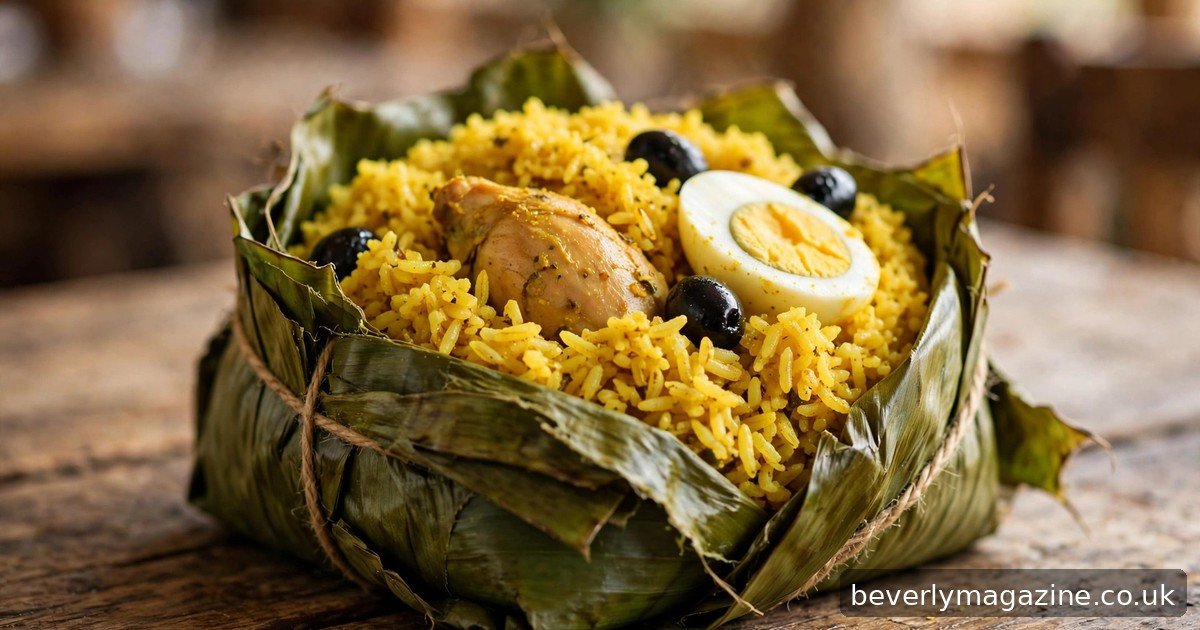
Juane is a traditional dish from the Amazon region of Peru. At its core, it is seasoned rice packed around pieces of chicken, half a hard-boiled egg, and an olive, then wrapped in a large green leaf and steamed or boiled until everything is cooked through and the flavors have blended.
The wrapping leaf matters. Traditionally, cooks use bijao leaves (from the Calathea plant), which grow in the Amazon basin. The leaf does more than hold the package together: it perfumes the rice with a subtle grassy aroma during cooking. Outside Peru, most cooks substitute banana leaves, which are easier to find and produce a similar effect.
The rice itself is seasoned with turmeric and cumin, which gives it a warm yellow color and an earthy flavor. The name “juane” comes from San Juan (Saint John the Baptist), whose feast day on June 24 is the dish’s biggest moment in Peru. The round bundle is said to represent the head of Saint John, which is why juane is eaten in huge quantities during the Fiesta de San Juan in Amazonian cities like Iquitos, Tarapoto, and Pucallpa.
Common variations include:
- Juane de gallina (chicken) — the classic version
- Juane de pescado — made with river fish, lighter and more aromatic
- Juane de cerdo — pork version, richer and heartier
- Avispa juane — a smaller version made with ground meat, popular as a snack
Why Juane Is So Hard to Find Outside Peru
Most Peruvian restaurants abroad build their menus around coastal and highland dishes: ceviche, lomo saltado, ají de gallina, pollo a la brasa. These are the dishes that made Peruvian food famous internationally, and they are what customers expect.
Juane belongs to cocina amazónica, the Amazonian branch of Peruvian cooking, which is far less known outside Peru. A restaurant needs a cook who knows the dish, access to large wrapping leaves, and enough customer demand to justify the labor — wrapping and steaming dozens of individual bundles is slow work. That combination is rare, which is why your search for the best juane near me may come up short on the first try.
The good news: Peruvian immigration has created pockets of Amazonian cooking in several countries, and the dish is having a quiet moment as food writers pay more attention to regional Peruvian cuisine. You just need to know where the pockets are.
Where to Look for the Best Juane Near Me
Peruvian restaurants with regional menus
Start with Peruvian restaurants in your city, but skip the ones whose menus stop at ceviche and lomo saltado. Look for menus that mention “comida selvática” (jungle food) or “cocina amazónica.” These are the places most likely to serve juane, tacacho con cecina, or patarashca.
Call ahead and ask directly: “Do you serve juane?” Many restaurants make it only on weekends or as a special, so a phone call saves a wasted trip. If the person answering hesitates, ask whether they have any Amazonian dishes — that tells you whether the kitchen knows the tradition at all.
Latin American food festivals and cultural events
Peruvian cultural associations and Latin American festivals sometimes feature regional food stalls. The Fiesta de San Juan in late June is the natural moment: Peruvian community groups in cities with large diaspora populations sometimes organize celebrations where juane appears. Follow local Peruvian community pages on social media and search for “Fiesta de San Juan” plus your city name.
Latin grocery stores and frozen sections
Some Latin American grocery stores stock frozen juane in their prepared-foods freezers, particularly stores that cater to Peruvian customers. The quality varies — frozen and reheated juane will never match a fresh one — but it is a legitimate way to taste the dish when no restaurant serves it. Look in the freezer aisle near frozen tamales and humitas, which are its closest cousins.
Food delivery apps
Search delivery apps for “juane” or “Peruvian” rather than scrolling restaurant lists. Small home-based Peruvian kitchens sometimes sell through delivery platforms without a physical storefront, and these are exactly the cooks most likely to make regional dishes like juane. Check reviews and photos before ordering: a real juane should arrive wrapped in its leaf.
Online Peruvian food sellers
A few online shops ship frozen Peruvian specialties nationwide in some countries. Shipping frozen food is expensive, so this makes sense mainly when you are feeding a group or want to try several Amazonian dishes at once. Order from sellers with clear photos of the actual product, not stock images.
How to Spot a Good Juane
When you do find juane, here is how to judge whether it is worth your money:
- The leaf should be intact and green. A properly wrapped juane arrives in its leaf, which should look fresh, not dried out or torn apart. The leaf is part of the experience — you unwrap it at the table.
- The rice should be yellow and cohesive. Turmeric gives the rice its color. It should hold together in a firm bundle, not fall apart into loose grains. Mushy, waterlogged rice means it was over-steamed.
- Check the filling ratio. A good juane has a generous piece of chicken, half an egg, and an olive clearly visible when you open it. If it is 95 percent plain rice, the kitchen is cutting corners.
- It should smell of the leaf. Unwrapping a fresh juane releases a distinctive aroma — earthy, slightly herbal, with the warmth of cumin. If it smells like nothing, the leaf was probably added as decoration after cooking.
- Ask when it was made. Juane is best the day it is made. Like other Latin comfort dishes — for example, the Colombian soup ajiaco colombiano is best fresh too — reheated versions lose texture and aroma.
What to Order With Juane
Juane is a complete meal in itself — rice, protein, egg — so you do not need much alongside it. That said, a few pairings work well:
- A fresh salad or salsa criolla. The onion-and-lime Peruvian salsa cuts through the richness of the rice.
- Ají sauce. Most Peruvian restaurants have a house hot sauce. A spoonful on the side wakes up the whole bundle.
- Chicha morada or Inca Kola. The traditional purple corn drink or Peru’s famous golden soda both pair naturally.
- Tacacho con cecina as a starter, if the restaurant serves Amazonian food. It is the other great dish of the Peruvian jungle: mashed plantain balls with dried pork.
If you are eating at a Peruvian restaurant for the first time, tell the staff it is your first juane. Cooks who care about regional food are usually happy to explain what you are eating.
Making Juane at Home When You Can’t Find It
If the search for the best juane near me turns up nothing, making it at home is very doable. The technique is closer to making tamales than to any complicated restaurant cooking.
What you need:
- 4 cups cooked rice, seasoned with turmeric, cumin, salt, and pepper
- 4 chicken thighs, seasoned and browned
- 2 hard-boiled eggs, halved
- 8 pitted black olives
- Banana leaves (sold frozen at Latin and Asian grocery stores), thawed and wiped clean
- Kitchen string
The method:
- Season the chicken thighs with salt, pepper, cumin, and garlic. Brown them in oil and set aside.
- Toss the cooked rice with turmeric, a little more cumin, and salt until evenly yellow.
- Lay out a banana leaf (use two overlapping pieces if they are small). Place a mound of rice in the center.
- Set a chicken thigh on the rice, add half an egg and two olives.
- Fold the leaf over the filling into a tight rectangular package and tie it with string.
- Steam the packages for about 45 minutes to an hour, until the chicken is fully cooked and the rice has absorbed the flavors.
- Rest for 10 minutes, then unwrap at the table and serve hot.
The banana leaf does real work here — do not be tempted to use foil instead. The leaf’s aroma is part of what makes juane taste like juane.
Juane Through the Year: When to Look
In Peru, juane peaks around the Fiesta de San Juan on June 24, when Amazonian cities eat it in enormous quantities and it appears on practically every menu. Outside Peru, that seasonality still matters: Peruvian restaurants and community groups are most likely to make juane in June, when the festival gives them a reason.
If your first search comes up empty, try again in June. Call Peruvian restaurants and ask whether they are doing anything for San Juan. You may find that the best juane near me only exists for a few weeks a year — which honestly makes it taste better.
Frequently Asked Questions
What is juane made of?
Traditional juane is made of turmeric-and-cumin-seasoned rice wrapped around chicken, half a hard-boiled egg, and black olives, all bundled in a bijao or banana leaf and steamed. Fish and pork versions exist, and the leaf is essential to the flavor.
Is juane the same as a tamale?
They are cousins, not twins. Both are steamed leaf-wrapped bundles, but tamales use masa (corn dough) while juane uses seasoned rice. Juane also always contains the egg-and-olive combination, which tamales do not.
What does juane taste like?
Earthy and savory. The turmeric-cumin rice is the dominant flavor, perfumed by the steamed leaf, with the chicken adding richness and the olive adding a briny contrast. It is comforting rather than spicy — closer to a Peruvian comfort dish than to heat-driven food.
Where can I buy frozen juane?
Check Latin American grocery stores with Peruvian clientele, particularly the frozen prepared-foods section near tamales and humitas. Some online Peruvian food shops also ship frozen juane. Quality varies, so look for sellers with real product photos.
Is juane gluten-free?
The traditional recipe is naturally gluten-free — rice, chicken, egg, olives, and leaf contain no gluten. However, always check with the restaurant, since some kitchens add seasoning blends or bouillon that may contain gluten.
Why is juane eaten on San Juan day?
The feast of Saint John the Baptist on June 24 is the most important festival in the Peruvian Amazon. Juane’s round bundle shape is said to represent the head of Saint John, and eating it during the festival is a centuries-old tradition in cities like Iquitos and Tarapoto.
The Takeaway
The best juane near me is rarely the first result on a map search — it is the Peruvian restaurant with a regional menu, the community festival in late June, or the small delivery kitchen run by someone who grew up eating it. Now you know what to ask for, what a good one looks like, and what to do when you cannot find one at all. The leaf, the yellow rice, the egg and olive inside: once you have had a real juane, you will recognize it anywhere.
