

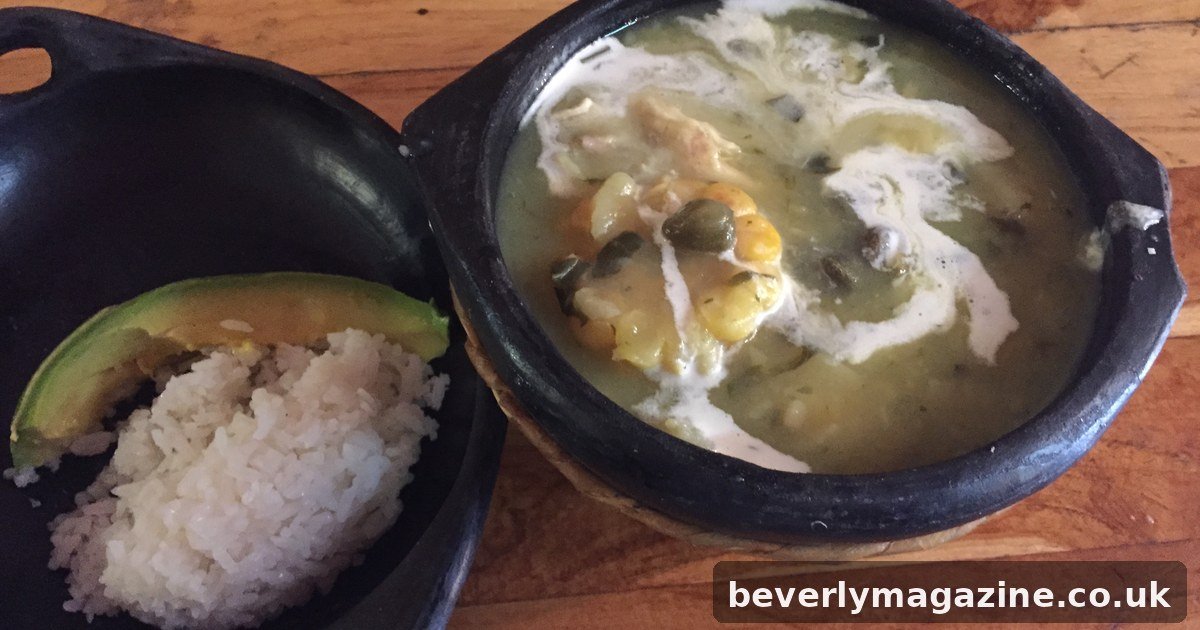
There are chicken soups, and then there is ajiaco. If you are searching for the best ajiaco colombiano near me, you are chasing one of Colombia’s most treasured dishes: a thick, golden potato soup from the highlands of Bogotá, perfumed with a wild Andean herb and served with a tableside ritual of cream, capers, and avocado. It is comfort food elevated to cultural icon.
But ajiaco is also a dish that is easy to get wrong — and many restaurant versions cut corners on the very ingredients that make it special. This guide explains what authentic ajiaco colombiano is, how to recognize a great bowl, and where to look for one near you.
What Is Ajiaco Colombiano?
Ajiaco colombiano — more precisely ajiaco santafereño, named after Bogotá’s colonial name, Santa Fe — is a hearty chicken and potato soup that is practically the official dish of Colombia’s capital. Its foundation is deceptively simple: chicken, corn on the cob, and not one but three varieties of potato, all simmered with guascas, a fragrant herb native to the Andean highlands.
The magic lies in the potatoes. Traditional ajiaco uses papa criolla (small, yellow, buttery Andean potatoes), papa sabanera, and papa pastusa. Each behaves differently in the pot: the papa criolla nearly dissolves, thickening the broth into a silky, golden body, while the other two hold their shape and give the soup substance. Outside Colombia, cooks substitute with Yukon Gold, russet, and red potatoes to mimic the effect.
The guascas herb is the soul of the dish. It grows wild in the high-altitude fields around Bogotá and gives ajiaco its distinctive earthy, slightly floral aroma — a flavor that Colombians abroad describe as the taste of home. Dried guascas can be found in Latin markets and online, which is how expatriate cooks keep the tradition alive.
What truly sets ajiaco apart, though, is how it is served. The soup arrives with its accompaniments on the side: heavy cream (or crema de leche), capers, sliced avocado, and often white rice. Each diner customizes their own bowl, swirling in cream, scattering briny capers, and tucking in avocado slices. It turns a simple soup into an interactive, deeply personal meal — and in Bogotá, it is the centerpiece of the traditional Sunday family lunch.
What Makes a Great Ajiaco Colombiano?
Here is how to tell an authentic, carefully made ajiaco from a pale imitation:
1. Three potatoes, three textures
The hallmark of real ajiaco is the interplay of potato textures: one variety dissolved into the broth, the others tender but intact. If the soup is thin and watery with a few potato chunks floating in it, the cook either used a single potato variety or did not give the papa criolla (or its substitute) time to break down. The broth should be naturally thick and golden — never thickened with flour or cornstarch.
2. Real guascas flavor
Guascas is non-negotiable. Its earthy aroma should be clearly present in the first spoonful — not overpowering, but unmistakable. Restaurants that skip it (or substitute plain oregano) produce a soup that may be pleasant but is not ajiaco. If you can, ask whether the kitchen uses guascas; a proud “yes” is one of the strongest authenticity signals there is.
3. Properly cooked chicken
The chicken — traditionally breast on the bone — should be poached gently in the broth, then shredded or cut into generous pieces and returned to the pot. It should be moist and flavorful, having given its richness to the soup. Dry, rubbery, or pre-cooked chicken tossed in at the end suggests a kitchen cutting corners.
4. Sweet corn, cooked through
Chunks of corn on the cob are essential, and they need enough time in the pot to become fully tender and sweet. Undercooked, starchy corn is a common flaw in rushed versions.
5. The full accompaniment spread
Capers, cream, avocado, and rice are not optional extras — they are part of the dish. A restaurant that serves ajiaco without them, or charges extra for each, does not understand (or respect) the tradition. The briny pop of capers against the rich, creamy broth is one of the great flavor contrasts in Latin cooking.
How to Find the Best Ajiaco Colombiano Near You
- Seek out Colombian restaurants — specifically Bogotano ones. Colombia’s regions each have their own soups (sancocho on the coast, for example), so prioritize restaurants that identify with Bogotá or the Andean interior. Menus advertising “ajiaco santafereño” or “cocina bogotana” are your best bet.
- Ask about the guascas and the potatoes. These two questions separate the serious kitchens from the pretenders: “Do you use guascas?” and “Do you use three kinds of potato?” Detailed, enthusiastic answers mean you are in the right place.
- Check for the accompaniments. Before ordering, confirm the ajiaco comes with capers, cream, and avocado. Their presence on the menu description is a strong positive signal.
- Look at the clientele. A Colombian restaurant filled with Colombian families — especially on weekends — is worth more than a hundred online reviews. Ajiaco is Sunday lunch food; places that serve it well tend to be busy on Sundays.
- Try Colombian bakeries and cafés. Many Colombian panaderías serve ajiaco on weekends alongside their baked goods. These casual spots often cook the way families do at home.
- Read reviews for specifics. Look for mentions of “thick,” “creamy broth,” “guascas,” or the capers-and-cream ritual. Reviews that describe these details come from diners who know what they are tasting.
- Do not confuse it with other soups. If a menu lists ajiaco but the description mentions plantains, yuca, or coconut milk, you are likely looking at a different regional soup (possibly sancocho). True ajiaco santafereño is a potato soup — potatoes are the star.
Frequently Asked Questions
What are the three potatoes in ajiaco?
Traditional ajiaco uses papa criolla, papa sabanera, and papa pastusa — three Andean potato varieties. The small yellow papa criolla dissolves during cooking and thickens the broth, while the sabanera and pastusa stay intact. Outside the Andes, cooks commonly substitute Yukon Gold, russet, and red potatoes to recreate the effect.
What is guascas, and can it be substituted?
Guascas (also spelled huascas) is a wild herb native to the high Andes around Bogotá, and it gives ajiaco its signature earthy aroma. Dried guascas is sold in Latin American markets and online. There is no perfect substitute, though some cooks use a mix of oregano and bay leaf in a pinch — the result is pleasant but noticeably different.
Is ajiaco the same as sancocho?
No. While both are beloved Latin American soups, they are distinct dishes. Ajiaco is a potato-based soup from the Bogotá highlands defined by guascas and the three-potato technique. Sancocho is a heartier, more rustic stew popular across Colombia and the Caribbean, typically made with plantain, yuca, corn, and various meats. They share a spirit but not a recipe.
Why are capers and cream served on the side?
It is tradition — and it is genius. Serving the accompaniments separately lets each diner balance the bowl to their taste: the briny bite of capers, the richness of cream, the cool freshness of avocado. The contrast between the salty capers and the mild, creamy broth is considered essential to the full ajiaco experience.
Is ajiaco colombiano gluten-free?
Traditionally, yes: the soup itself contains only chicken, potatoes, corn, herbs, and vegetables. However, some restaurant broths may include bouillon cubes or thickeners containing gluten, so ask the kitchen if you have celiac disease or a serious sensitivity.
Can ajiaco be made vegetarian?
Yes. A vegetarian ajiaco keeps the three potatoes, corn, and guascas but swaps the chicken broth for a rich vegetable broth. It loses some depth but remains delicious — the potato-and-guascas combination is flavorful enough to carry the dish. Many Colombian families make meatless versions during Lent.
More Latin American comfort food: our guides to the best seco de cordero near you and the best yuca con mojo near you.
The Bottom Line
The best ajiaco colombiano near me is the bowl that respects the trinity at the heart of the dish: three potatoes in three textures, the unmistakable perfume of guascas, and the full ritual of capers, cream, avocado, and rice on the side. Look for Bogotano-identified kitchens, ask direct questions about ingredients, and trust the evidence of a dining room full of Colombian families. When you lift that first spoonful of thick, golden broth — then swirl in the cream and scatter the capers — you will taste exactly why Bogotá claims this soup as its own.
